
North Central Bulgaria
Traditions and handcrafts from the Revival period
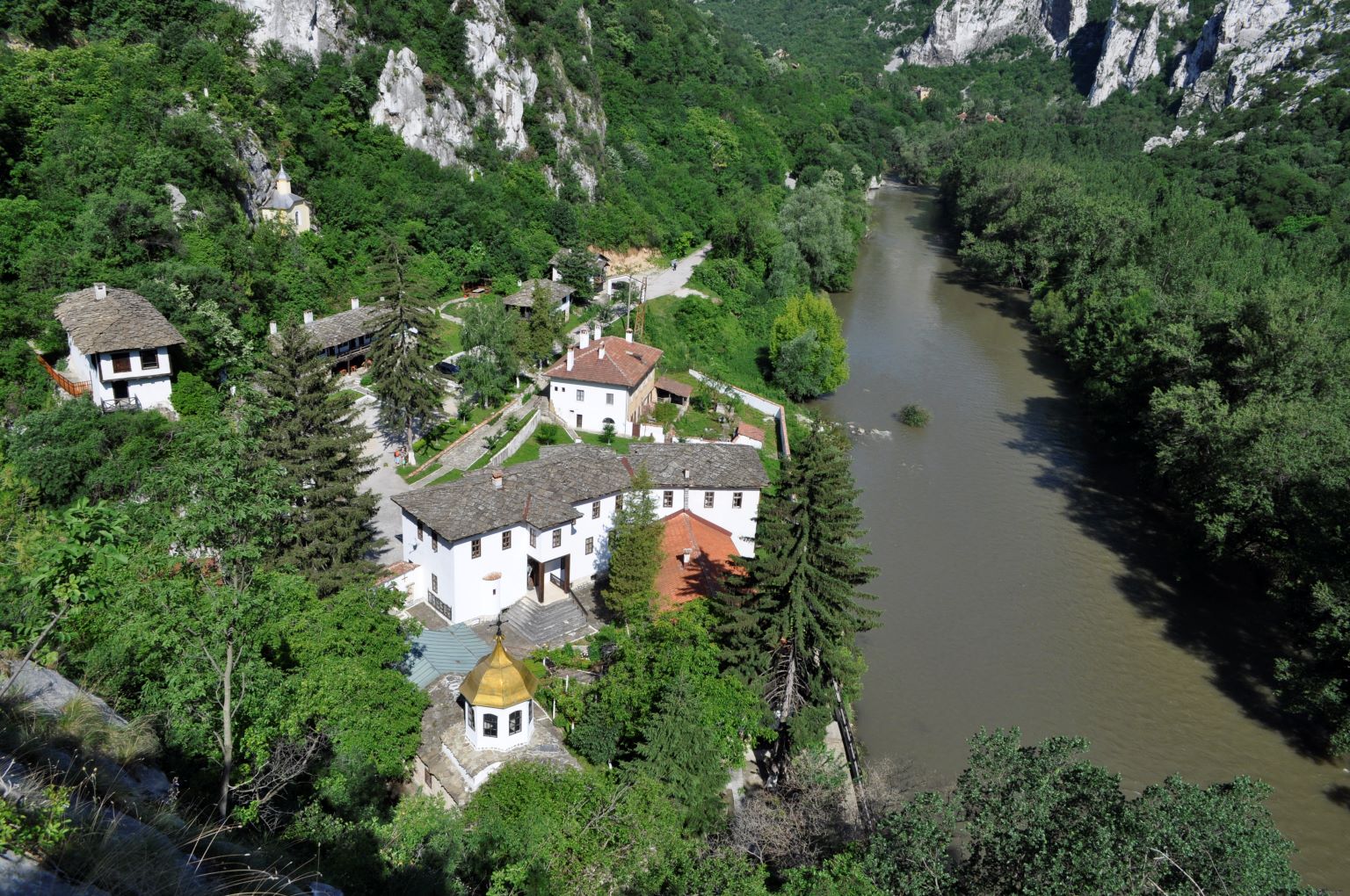
Etrople, Teteeven, Troyan, Gabrovo, Tryavna, Dryanovo, Elena and the numerous neighbouring villages have preserved traces of their Bulgarian Revival-period charm and romantic spirit by transforming – into living museums. The old high streets host artisan workshops, where one can serve as an apprentice or simply buy a unique souvenir. The small cafés and restaurants exude the atmosphere of the turn of the 20th century. The most interesting museums in the region are the National Exhibition of Traditional Handicrafts in Oreshak (close to Troyan Monastery), the Museum of Kolyo Ficheto in Dryanovo, the Daskalova House (for wood-carvings) and the Museum of Icons in Tryavna, the House of Humour and Satire in Gabrovo and Samovodska Charshiya in Veliko Turnovo. Also worth visiting is Etara, a unique open-air re-enactment museum of handicrafts.
The major regional centres of Lovech and Veliko Turnovo are very interesting to visitors. Both cities have well-preserved medieval fortresses dating back to the Second Bulgarian Kingdom (1185–1396). Close to the fortifications are National Revival neighbourhoods, shopping streets and museums. Arbanasi and Bozhentsi are close to the capital of the Second Kingdom – Veliko Turnovo – and have preserved their authentic Revival style. The stone houses and churches from the 17th and 18th centuries are real jewels for connoisseurs of architecture.
To the north of the Balkan Range, one can find numerous monasteries with interesting architecture, atmospheres and history. Amongst the rock monasteries in the Rusenski Lom Valley, it is worth seeing Ivanovo Rock Monastery, a UNESCO World Heritage Site, and the one near Besarbovo which is the only rock monastery that still functions. The old river port Ruse has well preserved its architectural heritage of restored Rococo and Baroque buildings. The other major city in the Danube plain, Pleven, has the Panorama, an interesting three-dimensional exhibition dedicated to the battle for Pleven
during the Russo-Turkish War of Liberation in 1877–1878.
This region is famous for its wineries, with the wine cellars in Svishtov, Lyaskovets and Ruse holding numerous awards. Recently, a wine museum was opened in Pleven.
The fringes of the Balkan Range and the Danube Plain offer numerous and easily accessible walking and cycling routes. Visitors can enjoy the illuminated cave of Sueva Dupka (village of Brestnitsa), and the caves of Bacho Kiro (Dryanovo) and Orlova Chuka (Ruse). Those who prefer more active holidays can try backpacking in the Balkan Range, where lots of lodges, shelters and more difficult walking routes provide options.
The plain offers the great biodiversity of Persina Nature Park, along the coast and on the islands of the Danube, and in Rusenski Lom Nature Park. The exceptional diversity of bird species is combined with interesting vegetation and rock formations.
Those who opt for a more relaxed holiday can enjoy the natural hot spas in Shipkovo, Chiflik and Voneshta Voda, where they can find modern hotels and guesthouses. There are also climbing sites in the gorge of Yantra (surrounding Veliko Turnovo), and in the canyon of Rusenski Lom and its tributaries, whilst Devetashka Cave is a true challenge for speleologists.ntra, around Veliko Turnovo, in the canyon of Russenski Lom and its tributaries, while the Devetashka Cave is a well-known challenge for speleologists.