
Southeast Bulgaria
Fire dances, dolmens, birds and sea
The Black Sea coast reveals one of the most impressive bird sights in Europe. Every year, hundreds of thousands of birds of more than three hundred species migrate via Bulgaria in all directions. This is the major migratory route Via Pontica. It crosses Bulgaria over the lakes of Mandren, Atanasovo, Burgas, Pomorie, Varna, Shabla, Durankulak and Srebrna. At the locality of Poda, near Burgas, there is a birdwatching centre that operates year-round.
The exceptional diversity of the flora and fauna on Strandja Mountain was the reason for the Silkosia Reserve to be declared the first protected territory in Bulgaria. Today, the entire mountain is a nature park, blending together the riches of nature, local culture and historical monuments of national significance.
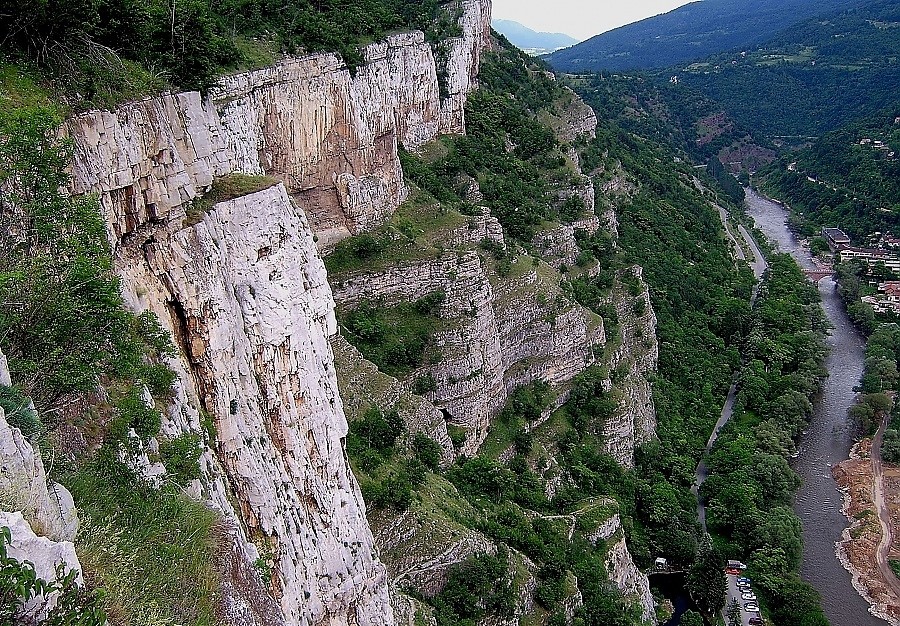
Another nature park in the region is Sinite Kamuni (“The Blue Rocks”). Part of the Balkan Range, it is an area of incredible beauty. The park includes special viewing sites, paths for blind and handicapped people, and special informational routes.
The sea coast shelters several reserves of biodiversity unique to Bulgaria. The estuaries of the rivers Ropotamo and Veleka are covered with lianas and other climbing plants, which come together to resemble a real jungle.
The entire coastline of the Black Sea to the south of the Balkan Range is full of countless little bays that still have wonderfully clean and peaceful beaches. The cliffs and rocky capes interspersing them attract divers and enthusiasts of aquatic archaeology and rock climbing.
The southern part of the region, where the Strandja Mountain reaches the Black Sea, maintains the old pagan tradition of fire dancing. To date, several villages in Strandja continue the tradition, in which Christian and pagan themes are interwoven. Old legends are revived over the coals every year in the beginning of June.
History is lives on in the ancient towns of Sozopol and Nesebar, with their churches, fortresses, ports and preserved ambiance of ancient Greek commercial ports from more than two thousand years ago. The combination of ancient monuments and Bulgarian Revival architecture turns these towns into genuine picture dictionaries of human civilisation and also into wonderful themes for painters, musicians and other artists.
The eastern part of the Balkan Range cherishes the memories of the Bulgarian National Revival and the Liberation Movement. There is almost no village or town without a link to some freedom fighter or enlightenment figure from the 18th and the 19th centuries. The cities and towns of Medven, Zheravna, Kotel and Sliven are all names that have left their imprint, together with those of the figures Zahari Stoyanov, Georgi Rakovski and Yordan Yovkov. These towns are interesting also for their vernacular architecture, which has been preserved for more than two centuries. Local museums provide details on the livelihood of the population in the past. Certain accommodation facilities enable visitors to immerse themselves in a Revival-period atmosphere without sacrificing comfort.
More of the magic of this region lives in the Sakar Mountains, where tens of dolmens and medieval fortresses are waiting to be discovered.