South Central Bulgaria
The valley of Roses, Thracian kings and Wine
The Valley of the Roses should be visited at the end of May. The aroma of blossoming attar roses and lavender intoxicates the air, and the countryside is rich with all colours and hues. This rose-harvest season. All the people from the villages and towns, all the way from Klisura to Kazanluk, migrate to the fields, where rose petals are picked at dawn. Almost every community has its local festival, and the Queen of Roses is selected in Kazanluk every year.
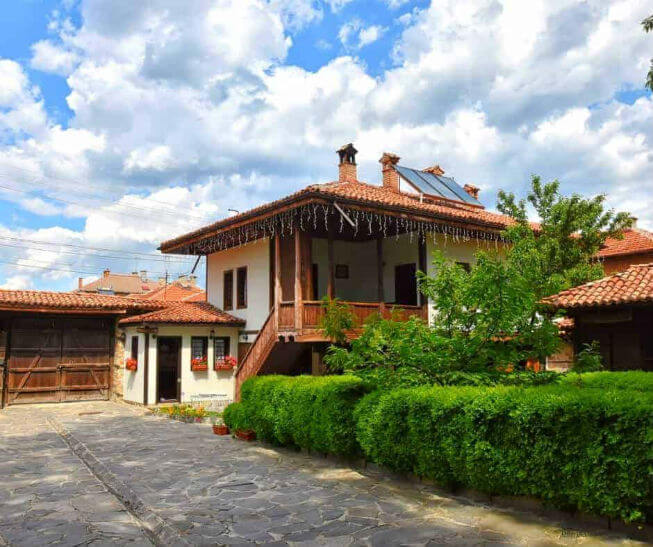
Karlovo, Sopot, Kalofer, Klisura, Koprivshtitsa and Panagyurishte occupy a special place in Bulgarian history. On the date when the 1876 April Uprising burst out and on the dates of birth of Vasil Levski, Ivan Vazov and Hristo Botev, major celebrations and festivities are organised with elements of both history and traditional folklore. The homes of the national heroes have been transformed into ethnographic and history museums. Koprivshtitsa – the hometown of Georgi Benkovski and Lyuben Karavelov – is an architectural reserve, where walking is a journey back in time and a feast for the senses. The houses of several other prominent Bulgarian Revival figures are well-preserved and frequently visited as well.
One of the most lavishly decorated, magnificent Orthodox churches in Bulgaria is situated above the town of Shipka, close to the historic mountain pass. This is the Nativity Memorial Church, built in the beginning of the 20th century to commemorate the Russian and Bulgarian soldiers who died in the War for Liberation.
Other historical sites in the region date back to much more distant times. The Valley of the Roses, also known as the Valley of the Thracian Kings, was the heart of the ancient Thracian nation, whose capital city was Seuthopolis. Today, the remains of the city are under the waters of Koprinka Dam, but six tombs of some of the great Thracian rulers can still be visited. The Tomb of Kazanluk is on the UNESCO World Cultural Heritage List, and the newly discovered worship site, consisting of a temple and a tomb, at the village of Starosel is equally impressive. In autumn 2004, a golden 665g mask of Seuthes III was discovered at the Thracian burial mound Golyamata Kosmatka, which is now open for visitors.
Some well-preserved monasteries to visit include the St Nicolas Monastery at Muglizh, the two monasteries in Kalofer and the convent in Sopot.
Top-quality wine cellars can be found everywhere in the region. Traditionally renowned is the misket (white wine grape) from Karlovo. Wineries in Brevostitsa, Pazmidovo, Banya, Brezovo, Chirpan, Pazardjik, Stara Zagora, Stamboliyski and Purvomay have quality selections, along with the recently opened Starosel and Anevo wineries.
The region hosts some of the largest and best-known spa resorts in Bulgaria – in Hisarya, Pavel Banya and Stara Zagora. Good swimming pools, mineral-water baths and hotels can be found also in Banya, in the Karlovo area, and in Strelcha.
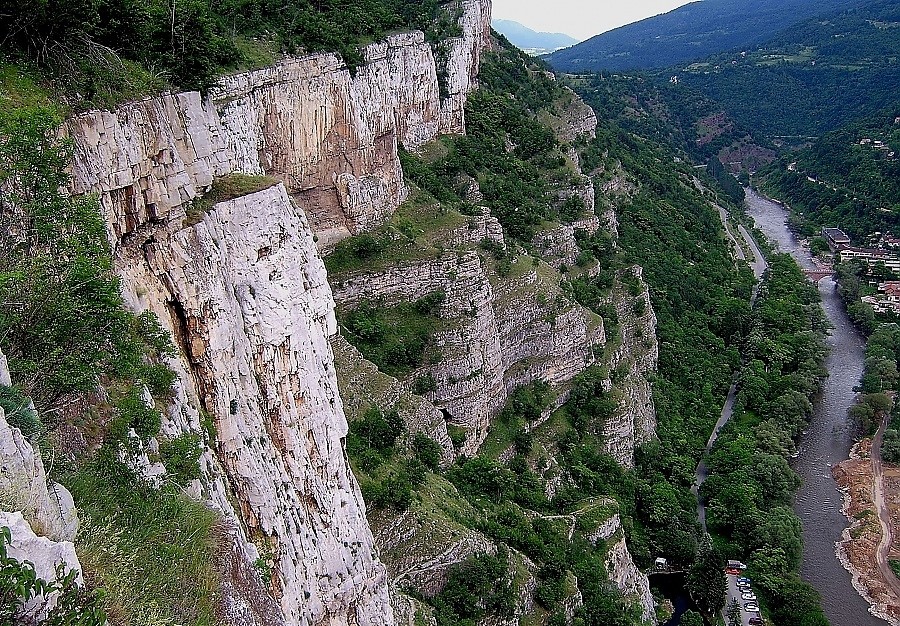
Most of the towns and villages are starting points for hiking in the Balkan Range and Sredna Gora. Although the latter is not a protected territory, its nature is very well preserved. The huge deciduous forests, where beech trees prevail, offer blissful shade and keep you cool in the summertime, and hide fields of wild raspberries, strawberries and hazelnuts, as well as incredibly cold water springs.
Those who prefer the more severe and, yet, more varied, face of nature can go north to Central Balkan National Park, where many marked trails and lodges are situated. Even more thrilling is the flying of delta- or paragliders above Sopot. The lift, which has recently been extended to Nezabravka lodge, will take you up to the very top of the mountain, where views are breathtaking.