
Rodopi
The land of Orpheus, sanctuaries and vultures
The Devil’s Throat Cave is the most probable place to have served as inspiration for the legend about Orpheus’ descent to the underworld. There are also the stunning caves of Yagodinska, Uhlovitsa and Snezhanka, as well as open-air karst sites, and the gorges near Trigrad, Buinovo and Teshel. On Chernatitsa Ridge, one can take in the rock formation called Chudnite Mostove (“The Marvellous Bridges”), a series of huge natural arches and caves that are impressive both to the eye and the ear.
The Rodopi have been inhabited for centuries. Even today, one can see the ancient Roman postal tracks from ages past, bridges, fortress ruins, and abandoned or functioning chapels tucked into the mountains.
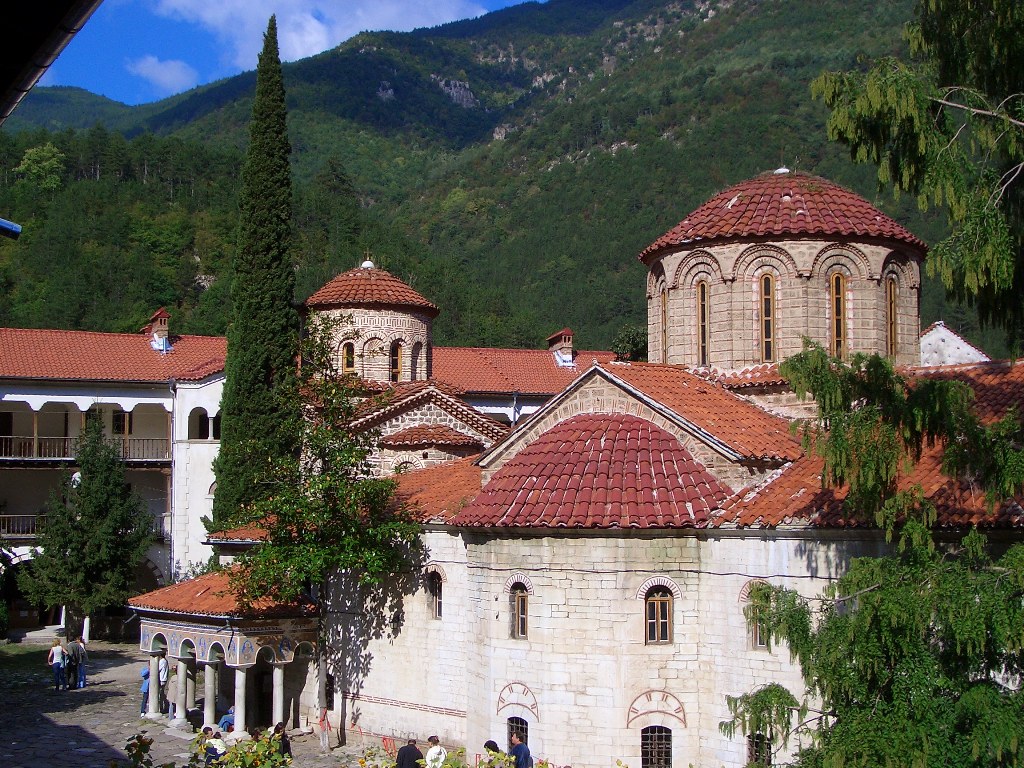
Bachkovo Monastery, founded in 1083, is one of the largest and most important religious and historical sites on the Balkans. The northern edges of the Rodopi are the location of some other enjoyable and significant monasteries, all accessible by road: Kuklen, Arapovo, Gorni Voden, Belashtitsa, Muldava and Byala Cherkva.
Asenova Fortress, along the road from Asenovgrad to Smolyan, is amongst the historical symbols of the Second Bulgarian Kingdom. The well-preserved two-storey church is situated at an elevation that offers a beautiful view to the mountain and to the valley of the Chaya River.
Shiroka Luka’s and Sokolovtsi’s houses date to the 19th century, built of stone and covered with tiles typical of the region. The old neighbourhood in Smolyan has been transformed into an architectural reserve, whilst the city’s Planetarium, the largest on the Balkans, offers unique opportunities for observing celestial bodies and the night sky. Local events to have gained popularity are the SunMoon festival for alternative and folk art (in Devin and Trigrad) and the Summer Jazz Festival in Smolyan.
Fishing and camping are traditional activities for a holiday in the Rhodope Mountains in the summertime. And in winter, the fabulous snow-cover in the western Rodopi turns the area into a noteworthy skiing destination. The natural hot spa resorts in Narechenski Bani, Velingrad, Devin and Banite are also well-known.
The landscape in the eastern Rodopi is entirely different from that in the western. Rivers run through wide valleys surrounded by cliffs of the most incredible shapes and hues. One can come across traces of early settlements, medieval and ancient Roman fortresses, Thracian sanctuaries, pre-historic altars and places of worship. The sanctuaries Perperikon and Tatul have gained much acclaim. Dolmens and cromlechs can be seen on almost every peak around Madzharovo, Kamilski Dol and Momchilgrad. Most of the archaeological and historical artefacts from the region have been gathered up and exhibited in the unique Museum of History in Kurdjali. A fantastic ethnographic exhibition is on display in Zlatograd.
Some great Bulgarian wineries are located in the region around the towns of Haskovo, Harmanli, Lyubimets and Ivailovgrad.
The numerous dams in the area offer excellent opportunities for fishing, rowing, windsufing and swimming. The eastern Rodopi host a huge amount of the plant and animal species typical of Bulgaria. The area of Madzharovo is one of the few in Europe where one can see the habitat of vultures and eagles. The largest pack of wolves in the country lives in Vulchi Dol Reserve. A lot of places offer wonderful conditions for bird-watching, bear-watching and other tours that let you observe the animals in their natural environment.